Okaukuejo Camp is the largest of Etosha’s three main rest camps and the southern entry point most travellers reach first via Andersson Gate. The campsite section sits next to the legendary Okaukuejo floodlit waterhole — one of the most reliable spots in southern Africa for after-dark sightings of black rhino, elephant, lion, and giraffe.
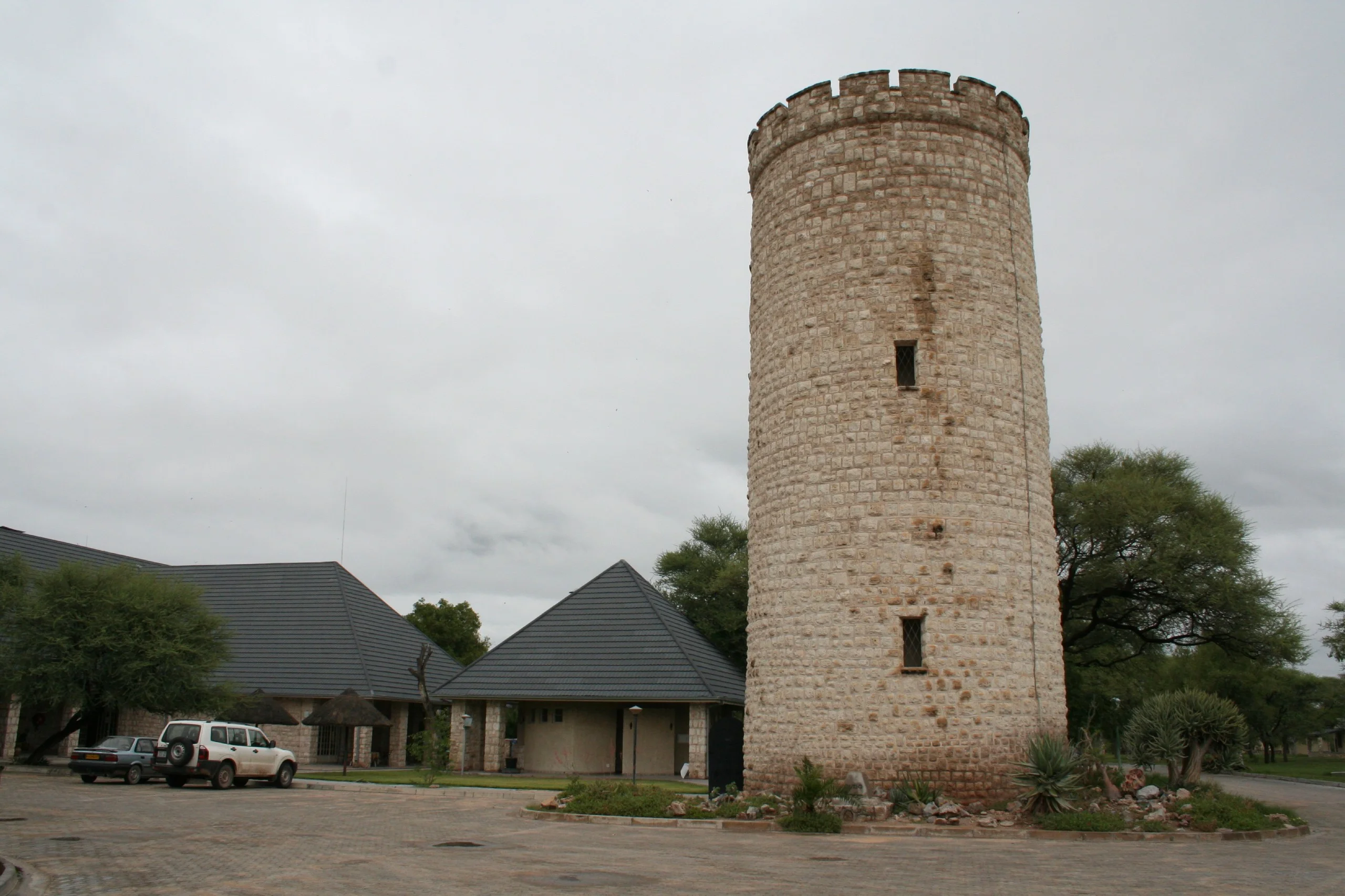
Okaukuejo Campsite rates (2026–2027)
NAD 460 per person per night (Nov 2026 – Jun 2027) · NAD 560 per person per night (Jul 2027 – Oct 2027). Each campsite pitch takes up to 8 people; park entry fees are payable separately at the gate. Rates are indicative — we confirm exact pricing when you enquire.
Why Camp at Okaukuejo
- The waterhole: rated by many photographers as the single best floodlit waterhole in Africa for nocturnal wildlife
- Strategic position: 17 km from Andersson Gate, central for game drives across southern Etosha
- Park hub: Etosha Ecological Institute (EEI), park warden’s office, and the largest support facilities are at Okaukuejo
- Best for first-time campers: easiest access, most facilities, biggest infrastructure
Pitches and Site Types
The campsite
Okaukuejo’s campsite has standard pitches — each with a power point (220V), a water tap and a braai (BBQ) area, and shared ablution blocks (hot showers and toilets) nearby. Sites take up to 8 people and are charged per person, and suit rooftop tents, ground tents, caravans and motorhomes. Camping is popular and books out months ahead in peak season, so book well in advance.
Facilities at Okaukuejo
- Restaurant + bar (separate from chalet section)
- Shop with basic groceries, ice, firewood, drinks, charcoal
- Fuel station (unreliable — refuel in Outjo before entering the park)
- Swimming pool (shared with chalet guests)
- Communal ablution blocks with hot water
- Laundry sinks
- Reception desk (24-hour)
- Floodlit waterhole viewing area (open to all camp guests)
Wildlife Visible from Camp
The Okaukuejo floodlit waterhole is fenced from the camp, with seating areas and low walls along the perimeter. Sightings vary by season:
- Dry season (June-October): consistent black rhino visits after dark, regular elephant, occasional lion, giraffe, springbok, oryx
- Green season (November-April): animals more dispersed, but still rhino, jackal, smaller antelope; better birdlife
- Best viewing window: 19:00-23:00 for rhino activity peak
Practical Information
| Detail | Information |
|---|---|
| Closest gate | Andersson Gate (17 km south) |
| Reception hours | 24-hour |
| Check-in time | From 14:00 |
| Check-out time | By 10:00 |
| Quiet hours | 22:00-06:00 (no generators) |
| Power voltage | 220V (UK/SA Type M plug) |
| Mobile reception | MTC patchy, TN Mobile better |
| Wi-Fi | Limited at reception only |
Frequently Asked Questions
How far in advance should I book Okaukuejo camping?
Peak season (July-October school holidays especially) Okaukuejo campsites can fill 6-9 months ahead. For shoulder seasons (May-June or November) 3-4 months ahead is usually sufficient. Last-minute pitches occasionally open due to cancellations.
Are the campsites fenced from wildlife?
The camp perimeter is fenced. Smaller animals (jackal, mongoose, ground squirrels) sometimes enter the camp; larger predators do not. Always store food securely and never leave it unattended.
Can I cook at the campsite?
Yes. Each pitch has a braai (BBQ) area. Bring your own grid. Firewood and charcoal are available in the camp shop.
Is the swimming pool open year-round?
Yes, weather permitting. Most useful in the hot summer months (October-March) when daytime temperatures regularly exceed 35°C.
Plan Your Etosha Camping Trip
For a full overview of all camping options across Etosha, see our complete Etosha camping guide. For booking enquiries, email bookings@etoshanationalpark.com.na or WhatsApp +264 81 277 6560.
About this guide
Our planning team has personally driven every Etosha gate-to-camp route, stayed at multiple inside-park rest camps and outside-park lodges across both wet and dry seasons, and helped past travellers plan dozens of custom itineraries. Specific dates, distances, and pricing reflect our first-hand visits and verified published sources.
Verified sources for this article: Namibia Wildlife Resorts, IUCN Red List, BirdLife International, Etosha Wikipedia. See our editorial policy and corrections log.
Comparing camps? See us first in Google.
You can tell Google to prioritise this site in your own search results and AI answers. It takes one click, it applies to your Google account, and you can undo it at any time.