Stay Inside Etosha: All 6 Etosha Rest Camps
Inside Etosha
Inside The Park
Compare all six in-park camps before you choose your route.
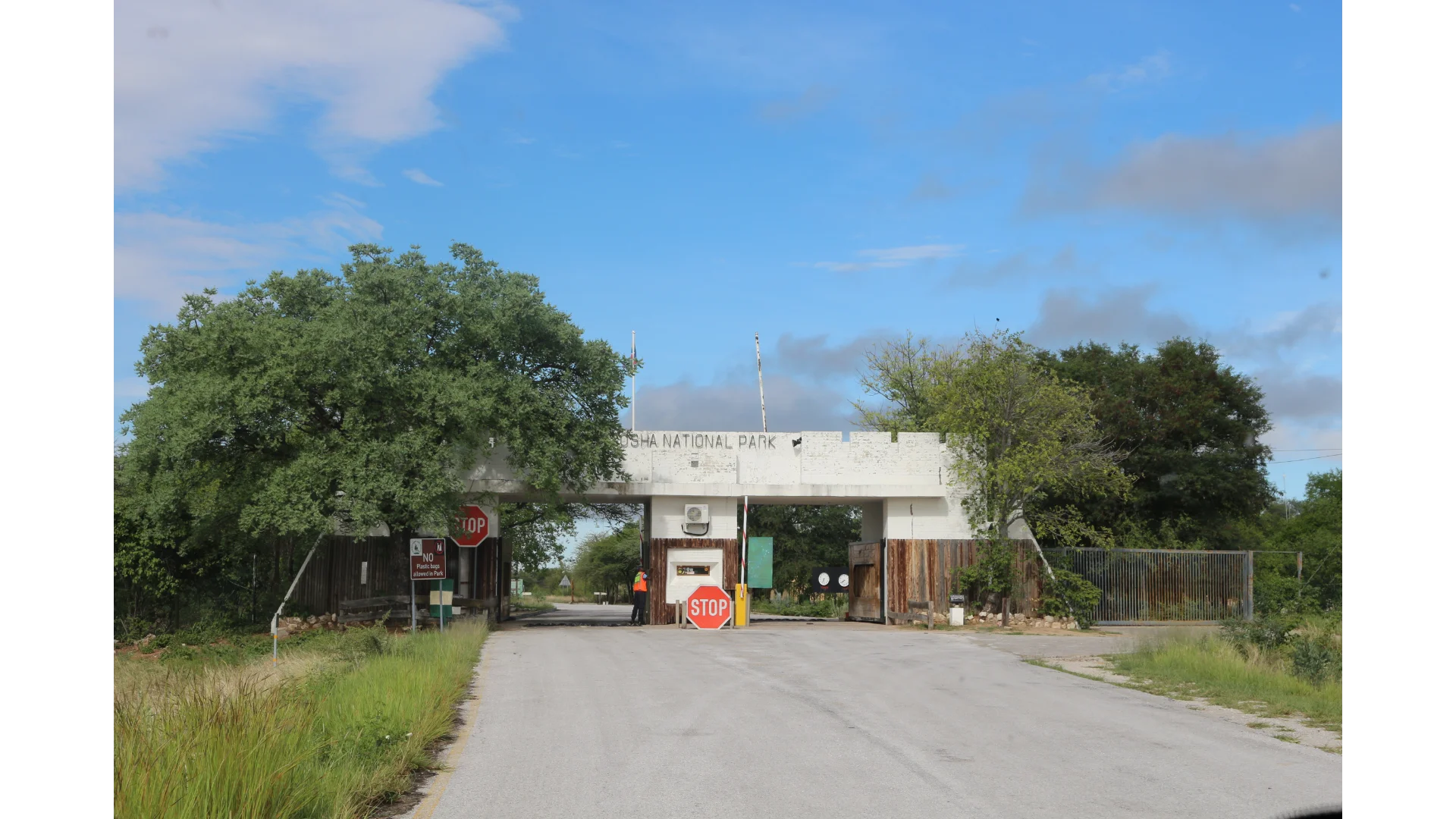
ANDERSON GATE · ICONIC WATERHOLES
Okaukuejo
From NAD 1,900
CENTRAL POSITION · MORNING WATERHOLES
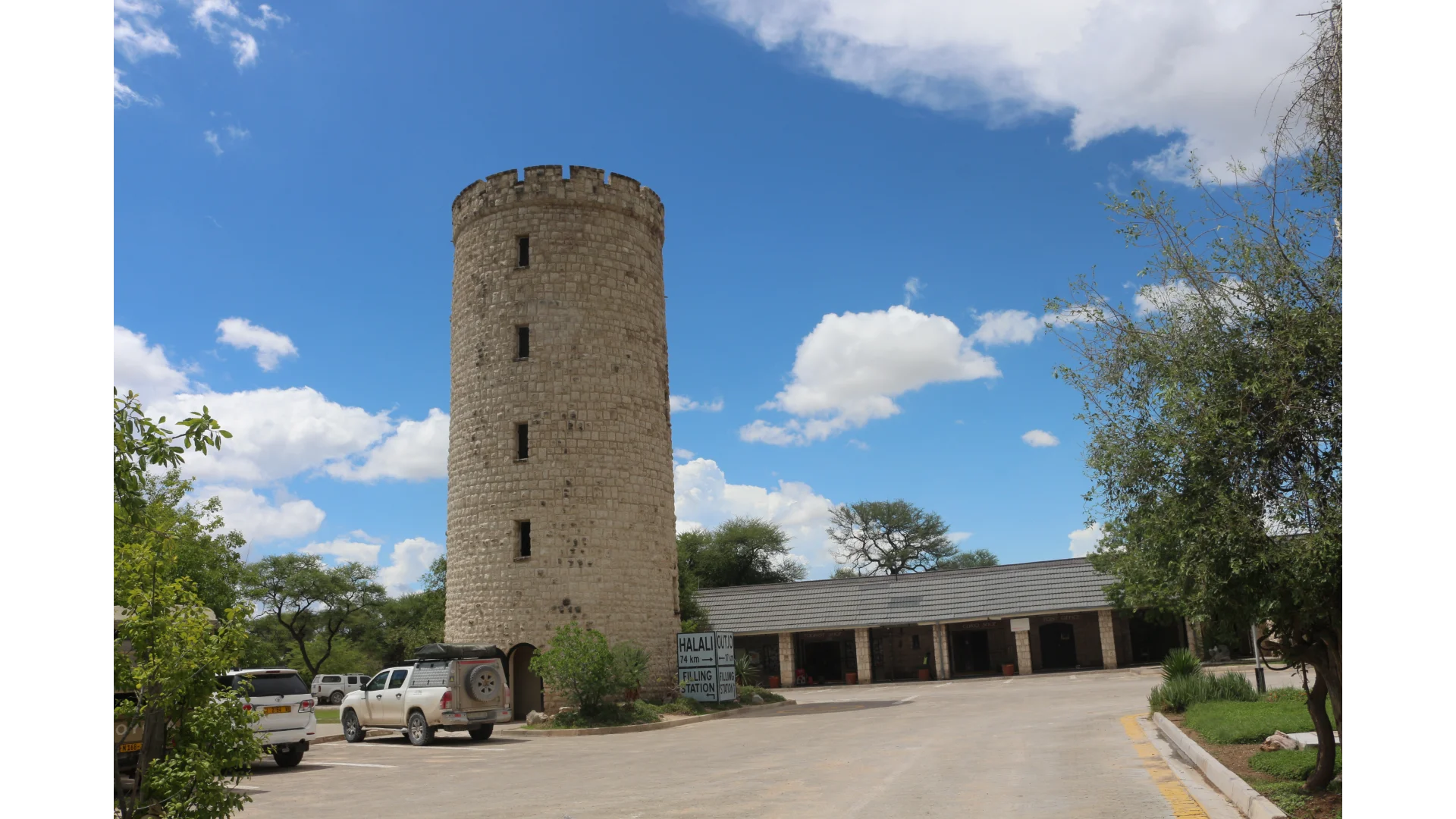
Halali
From NAD 1,400
EASTERN ROUTE · FORT ATMOSPHERE
Namutoni
From NAD 1,840
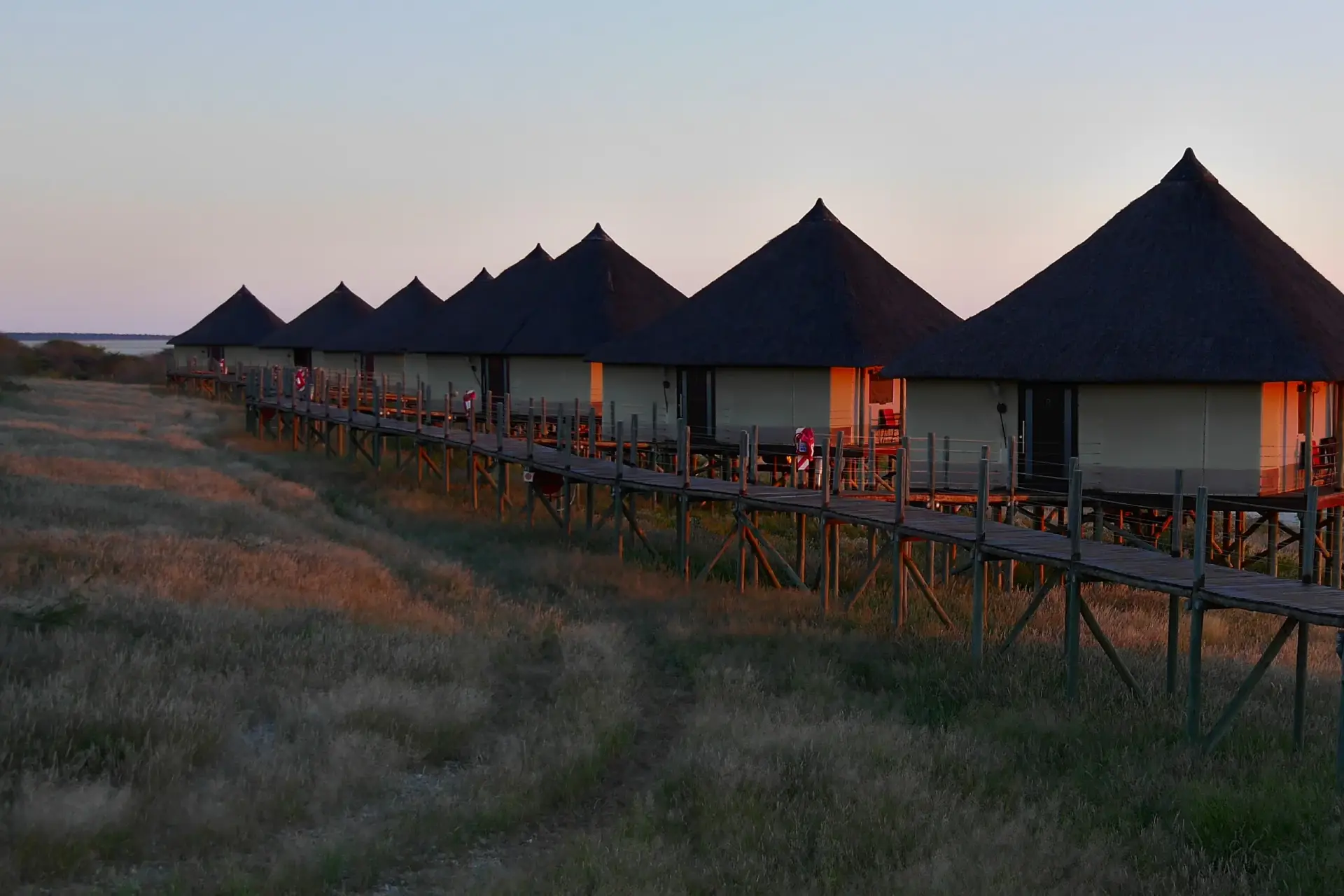
PAN EDGE · PRIVACY & ATMOSPHERE
Onkoshi
From NAD 3,180
WESTERN RIDGE · QUIET ZONE
Dolomite
From NAD 3,180
NORTH-WEST · OVERLAND FEEL
Olifantsrus
From NAD 510

Comparing camps? See us first in Google.
You can tell Google to prioritise this site in your own search results and AI answers. It takes one click, it applies to your Google account, and you can undo it at any time.
Everything Inside Etosha National Park
The 22,270 km² inside Etosha
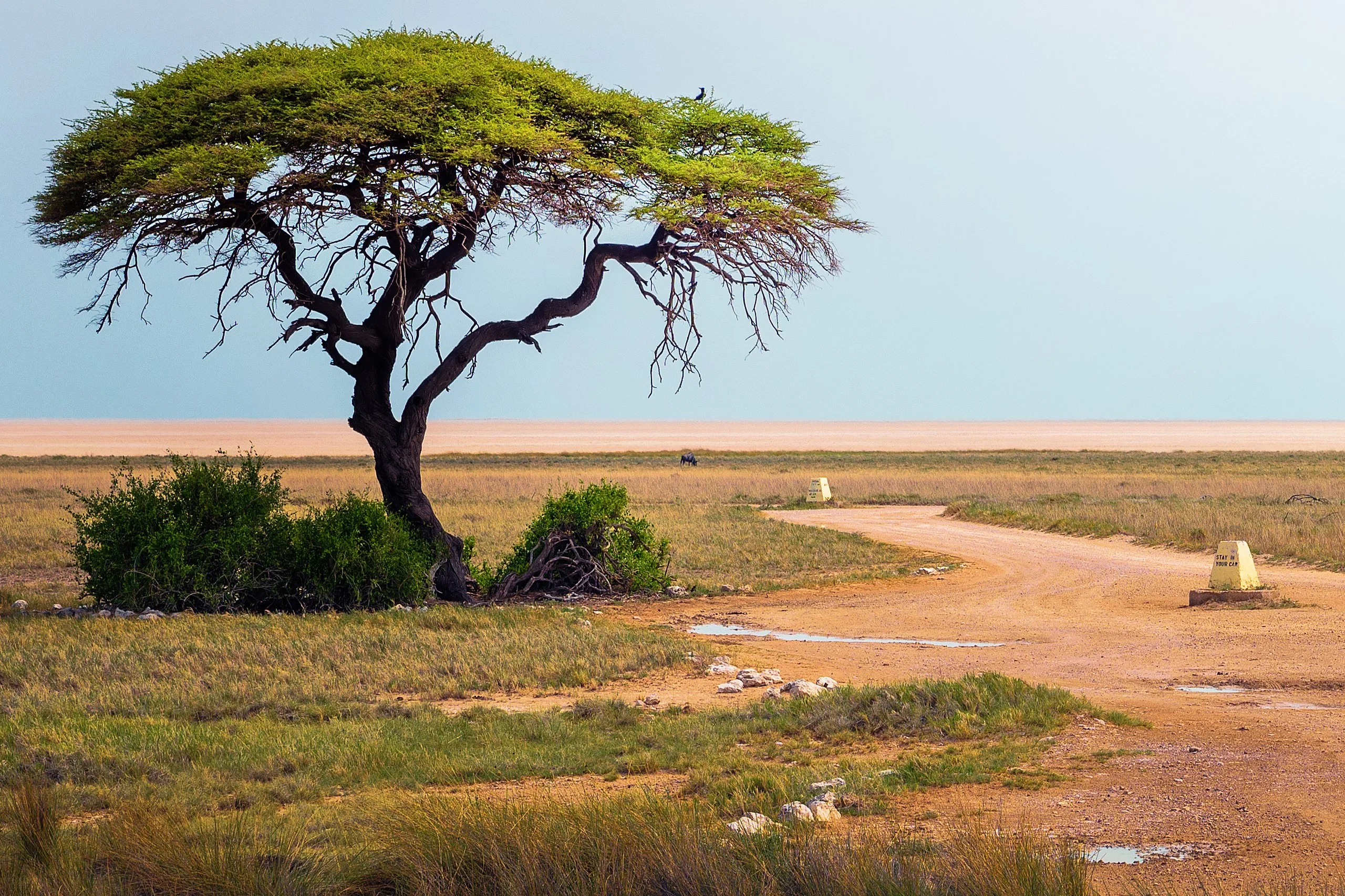
Etosha National Park occupies 22,270 km² of north-central Namibia, roughly the size of Switzerland. The park is built around the Etosha Pan — a 4,800 km² salt pan often visible from space, which gives the park its name (Etosha means “Great White Place” in Oshindonga). Around the pan, the landscape shifts between mopane woodland in the north-east, grassy plains in the west, camelthorn savanna in the south, and dolomite hills in the north-west.
The six rest camps
Okaukuejo (south-central) is the park headquarters and the only camp with a floodlit waterhole hosting nightly black rhino, elephant and lion visits. Halali sits midway with a quiet Moringa waterhole famous for leopard and rhino. Namutoni, the easternmost camp, is built around the 1902 German fort near Fischer’s Pan birding loop. Onkoshi is the most exclusive — 15 chalets elevated over the pan. Dolomite Resort opens the western wilderness with 20 chalets. Olifantsrus is camping-only in the western sector.
The five public gates
Andersson Gate (south-west) is the busiest entry from Windhoek via the C38. Von Lindequist Gate (east) receives traffic from the B1. King Nehale Gate (north) opens to the Ondangwa-Oshakati corridor. Galton Gate (far west) is the entry to the Dolomite/Olifantsrus western sector. Nehale Lyamingo Gate (north-east) serves local communities with seasonal tourist access.
The main road loops
The park’s internal gravel-road network totals about 800 km. The main southern loop (Okaukuejo to Halali to Namutoni) is the high-sighting spine. The eastern loop around Fischer’s Pan is a birder’s circuit. The western sector (Dolomite-Olifantsrus-Galton) is wilder and excellent for lions, black-faced impala and Hartmann’s mountain zebra. Speed limits: 60 km/h on main roads, 40 km/h inside camps.
30+ named waterholes
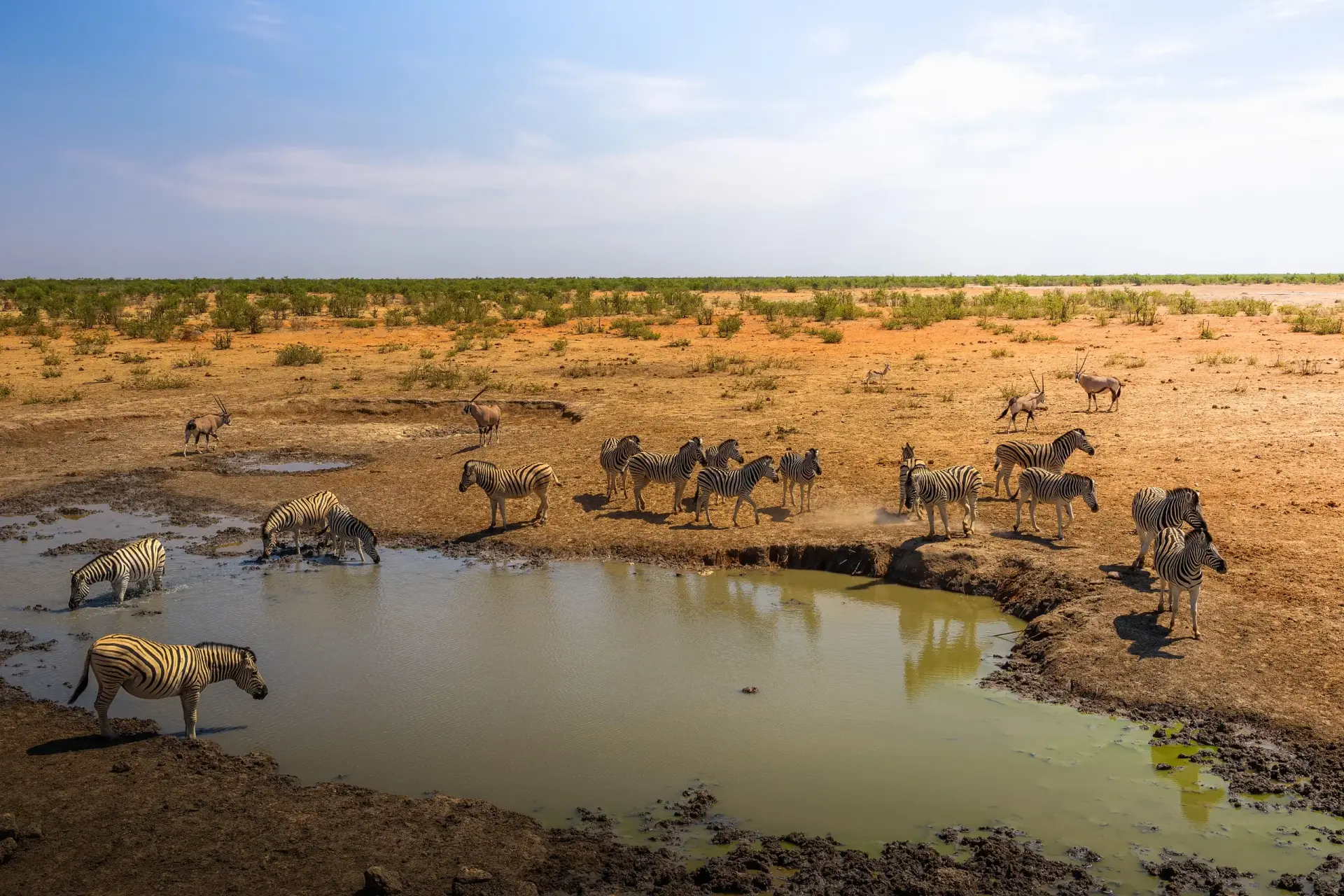
Signature waterholes include Okaukuejo (floodlit rhino/elephant/lion at night), Nebrownii (elephant herds), Gemsbokvlakte, Olifantsbad, Rietfontein (lions), Goas, Halali waterhole (leopard), Klein Namutoni (silent-code zone), and Chudop (giraffe, rare roan).
Wildlife inside the park
Etosha hosts an estimated 500+ black rhino (one of Africa’s most significant populations), 300-400 lions, 2,500 elephants, 300+ leopards, and 114 mammal species overall. 340 bird species, including 35 raptors. Four of the Big Five (no buffalo). Endemic species include black-faced impala, Damara dik-dik, and Hartmann’s mountain zebra.