Halali Camp is Etosha’s central rest camp — a quieter, more compact base than Okaukuejo, set among dolomite kopjes about halfway between the southern and eastern gates. The campsite is best known for the Moringa floodlit waterhole, where leopard sightings are markedly more frequent than at the larger camps.
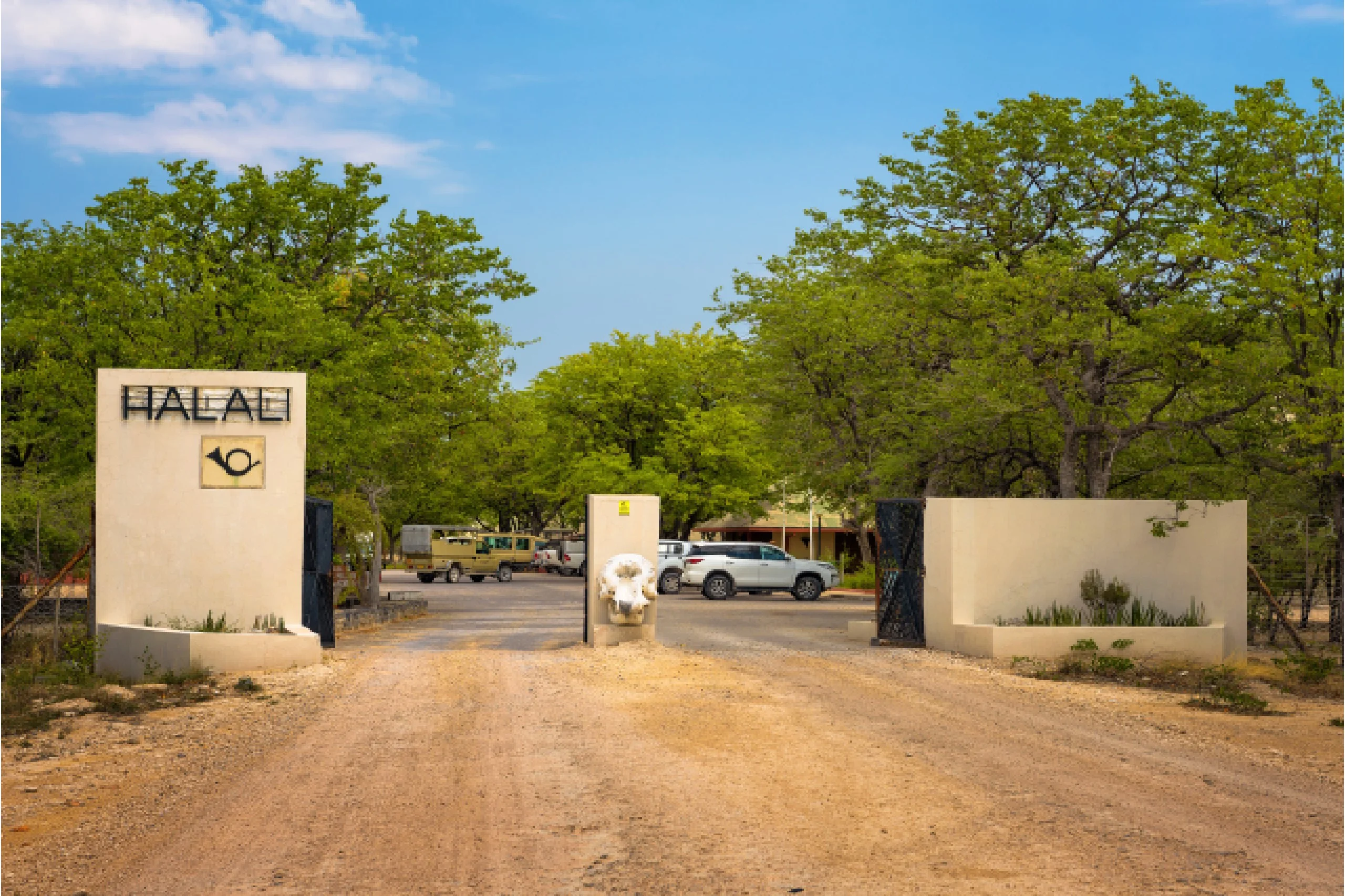
Halali Campsite rates (2026–2027)
NAD 460 per person per night (Nov 2026 – Jun 2027) · NAD 550 per person per night (Jul 2027 – Oct 2027). Each campsite pitch takes up to 8 people; park entry fees are payable separately at the gate. Rates are indicative — we confirm exact pricing when you enquire.
Why Camp at Halali
- Moringa waterhole: the best floodlit waterhole for leopard sightings, plus regular elephant, black rhino, hyena
- Quieter atmosphere: roughly half the visitor traffic of Okaukuejo
- Strategic central position: ideal base for two-direction game drives (south to Okaukuejo loop or east to Namutoni)
- Best for return visitors: if you’ve already done Okaukuejo, Halali offers a different, more contemplative experience
Pitches and Site Types
Powered Campsites
Standard powered pitches with 220V outlet, water tap, and braai stand. Pitches are spaced among trees giving more shade than Okaukuejo’s more open layout.
Facilities at Halali
- Restaurant + bar (chalet-side, walkable from camp)
- Shop with basic groceries, drinks, firewood
- Swimming pool (shared with chalet guests)
- Communal ablution blocks with hot water
- Reception desk (24-hour)
- Floodlit Moringa waterhole viewing area (short walk from camp)
- Kopje hiking trail accessible from camp (limited, daylight only)
Wildlife at Moringa Waterhole
Moringa is smaller and more intimate than the Okaukuejo waterhole, with rocky terrain that brings predators closer. Reported sightings:
- Leopard: the rest camp’s signature sighting — a leopard regularly hunts the waterhole at night
- Black rhino: consistent dry-season visitor, often after midnight
- Elephant: family groups during the dry months
- Spotted hyena: regularly drink and patrol the area
- Honey badger and jackal: small but characterful nocturnal regulars
Practical Information
| Detail | Information |
|---|---|
| Distance from Okaukuejo | ~70 km (1.5 h game-drive pace) |
| Distance from Namutoni | ~75 km (1.5 h game-drive pace) |
| Reception hours | 24-hour |
| Check-in time | From 14:00 |
| Check-out time | By 10:00 |
| Quiet hours | 22:00-06:00 (no generators) |
| Power voltage | 220V (UK/SA Type M plug) |
| Mobile reception | Patchy on both networks |
Frequently Asked Questions
Is Halali a better camping choice than Okaukuejo?
For first-time visitors who haven’t seen the iconic Okaukuejo floodlit waterhole, Okaukuejo is the higher-impact choice. Halali is the better second-camp choice, the better leopard-spotting choice, and the quieter alternative for travellers who prioritise atmosphere over crowds.
How easy is it to walk to the Moringa waterhole at night?
Very easy and safe — the waterhole is within the fenced camp perimeter, accessible via a short walk on a lit path. Bring a torch for the campsite portion of the walk.
Can I drive to Halali in any vehicle?
Yes. The road from Okaukuejo to Halali is well-maintained gravel suitable for any 2WD car. Allow 1.5 hours at the 60 km/h park speed limit, longer if you stop at waterholes en route.
Plan Your Etosha Camping Trip
For a full overview of all Etosha camping options, see our complete Etosha camping guide. For booking, email bookings@etoshanationalpark.com.na or WhatsApp +264 81 277 6560.
About this guide
Our planning team has personally driven every Etosha gate-to-camp route, stayed at multiple inside-park rest camps and outside-park lodges across both wet and dry seasons, and helped past travellers plan dozens of custom itineraries. Specific dates, distances, and pricing reflect our first-hand visits and verified published sources.
Verified sources for this article: Namibia Wildlife Resorts, IUCN Red List, BirdLife International, Etosha Wikipedia. See our editorial policy and corrections log.
Comparing camps? See us first in Google.
You can tell Google to prioritise this site in your own search results and AI answers. It takes one click, it applies to your Google account, and you can undo it at any time.