Namutoni Camp is Etosha’s eastern rest camp, set inside the historic 1903 German colonial fort that gives the camp its distinctive character. The campsite sits below the fort walls, with King Nehale Waterhole and the wide Andoni grasslands within easy game-drive range.
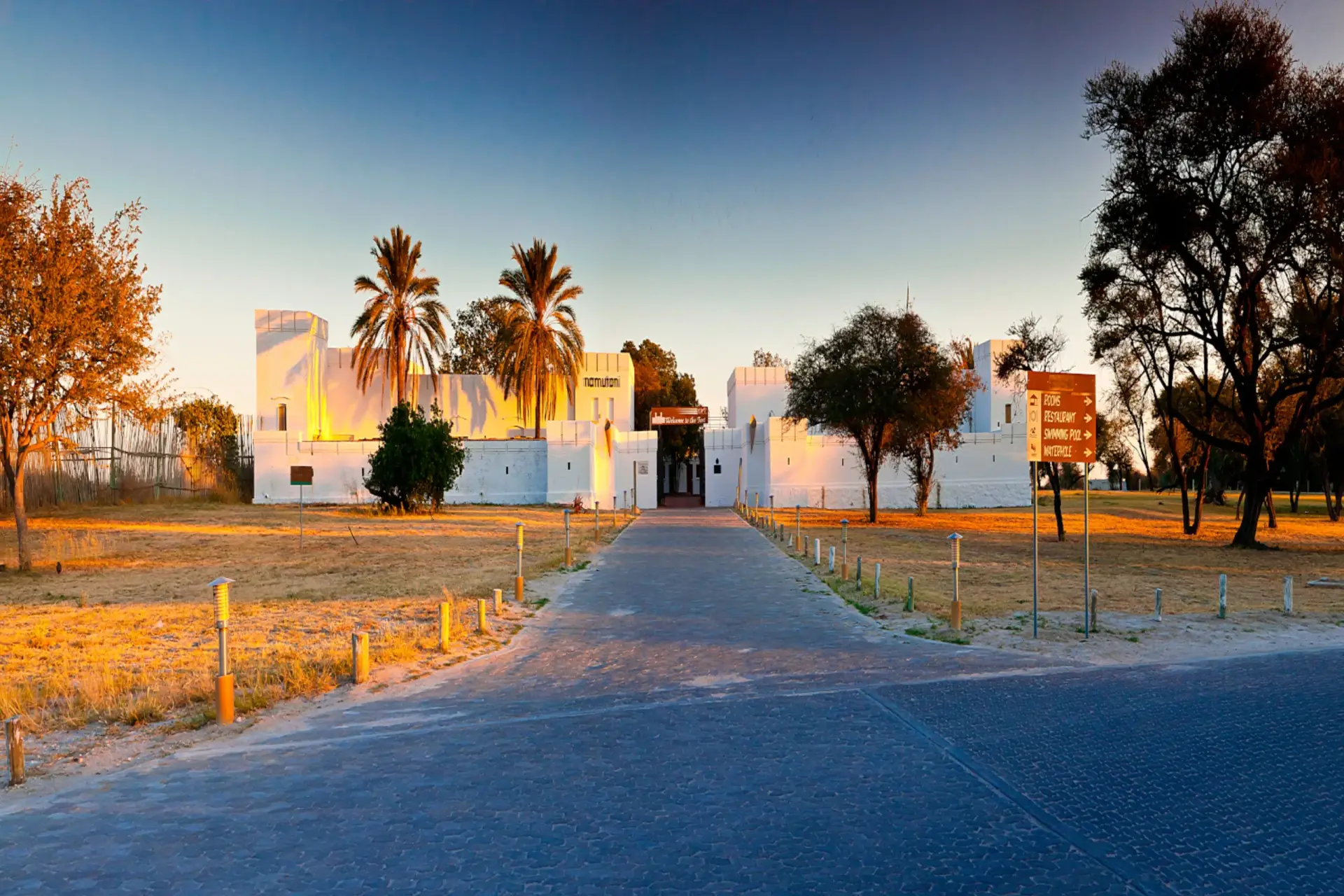
Namutoni Campsite rates (2026–2027)
NAD 460 per person per night (Nov 2026 – Jun 2027) · NAD 550 per person per night (Jul 2027 – Oct 2027). Each campsite pitch takes up to 8 people; park entry fees are payable separately at the gate. Rates are indicative — we confirm exact pricing when you enquire.
Why Camp at Namutoni
- The historic fort: built in 1903 as a German cavalry outpost, destroyed in the 1904 Owambo uprising, rebuilt in 1906 — open to camp guests as a museum
- Eastern access: closest to Von Lindequist Gate (~10 km), best for travellers driving from Tsumeb or the Caprivi
- Different ecology: Mopane woodland and the Fischer’s Pan area give a different feel than the southern Etosha plains
- King Nehale Waterhole: a key elephant and giraffe spot, particularly in the late dry season
Pitches and Site Types
Powered Campsites
Powered pitches sit in two clusters with mature shade trees. Each has a 220V outlet, water tap, and a braai (BBQ) stand. Comfortable for ground tents, rooftop tents, caravans, and small motorhomes.
Facilities at Namutoni
- Restaurant + bar (inside the fort, atmospheric setting)
- Shop with basics, drinks, firewood
- Swimming pool (shared with chalet/fort-room guests)
- Communal ablution blocks with hot water
- Reception desk (24-hour)
- Fort museum and historic walls (free for camp guests)
- Floodlit waterhole at the fort (smaller than Okaukuejo or Moringa)
Wildlife and Game-Drive Strategy
- King Nehale Waterhole (~30 km): elephant and giraffe stronghold in late dry season
- Fischer’s Pan (~5 km): ephemeral water in the wet season — flamingo and pelican when flooded
- Andoni grasslands (north): open plains good for cheetah, oryx, springbok, occasional lion
- Klein Namutoni (waterhole): consistent giraffe and zebra activity
- Chudob Waterhole (~5 km): reliable elephant and zebra in the dry months
Practical Information
| Detail | Information |
|---|---|
| Closest gate | Von Lindequist (10 km east) |
| Distance from Halali | ~75 km (1.5 h game-drive pace) |
| Distance from Tsumeb (outside) | ~108 km |
| Reception hours | 24-hour |
| Check-in time | From 14:00 |
| Check-out time | By 10:00 |
| Quiet hours | 22:00-06:00 (no generators) |
| Power voltage | 220V (UK/SA Type M plug) |
| Mobile reception | Better than Halali due to Tsumeb proximity |
Frequently Asked Questions
How does Namutoni compare to Okaukuejo for camping?
Okaukuejo wins on waterhole drama (its floodlit pool is unmatched). Namutoni wins on atmosphere — sleeping inside a historic fort beats sleeping next to a parking lot. For a 4+ night Etosha trip, splitting nights across both gives you the best of both halves of the park.
Is the Namutoni Fort museum included with camping?
Yes. Camp guests can enter the fort museum and walk the historic walls during daylight hours at no extra charge.
Can I drive directly from Tsumeb in one day?
Easily. Tsumeb to Von Lindequist Gate is ~108 km and the gate to Namutoni Camp is another 10 km — comfortable 2-hour drive, leaving most of the day for game viewing.
Plan Your Etosha Camping Trip
For a full overview of all Etosha camping options, see our complete Etosha camping guide. For booking, email bookings@etoshanationalpark.com.na or WhatsApp +264 81 277 6560.
About this guide
Our planning team has personally driven every Etosha gate-to-camp route, stayed at multiple inside-park rest camps and outside-park lodges across both wet and dry seasons, and helped past travellers plan dozens of custom itineraries. Specific dates, distances, and pricing reflect our first-hand visits and verified published sources.
Verified sources for this article: Namibia Wildlife Resorts, IUCN Red List, BirdLife International, Etosha Wikipedia. See our editorial policy and corrections log.
Comparing camps? See us first in Google.
You can tell Google to prioritise this site in your own search results and AI answers. It takes one click, it applies to your Google account, and you can undo it at any time.