Namutoni Camp
Namutoni Camp is built inside and around Fort Namutoni — a German colonial fortification dating to 1906 — making it the only camp in Etosha National Park with significant built heritage.
- Location
- Eastern Etosha, 18.81° S, 16.94° E
- Nearest gate
- Von Lindequist Gate (8 km east)
- Distance from Windhoek
- ~550 km (6 hr drive via Tsumeb)
- Accommodation types
- 3 (camping, double room, bush chalet)
- Signature feature
- 1906 German fort + Fischer’s Pan wetland for birding
- Check-in / check-out
- 14:00 / 10:00
- Camp facilities
- Restaurant, swimming pool, shop, fuel station
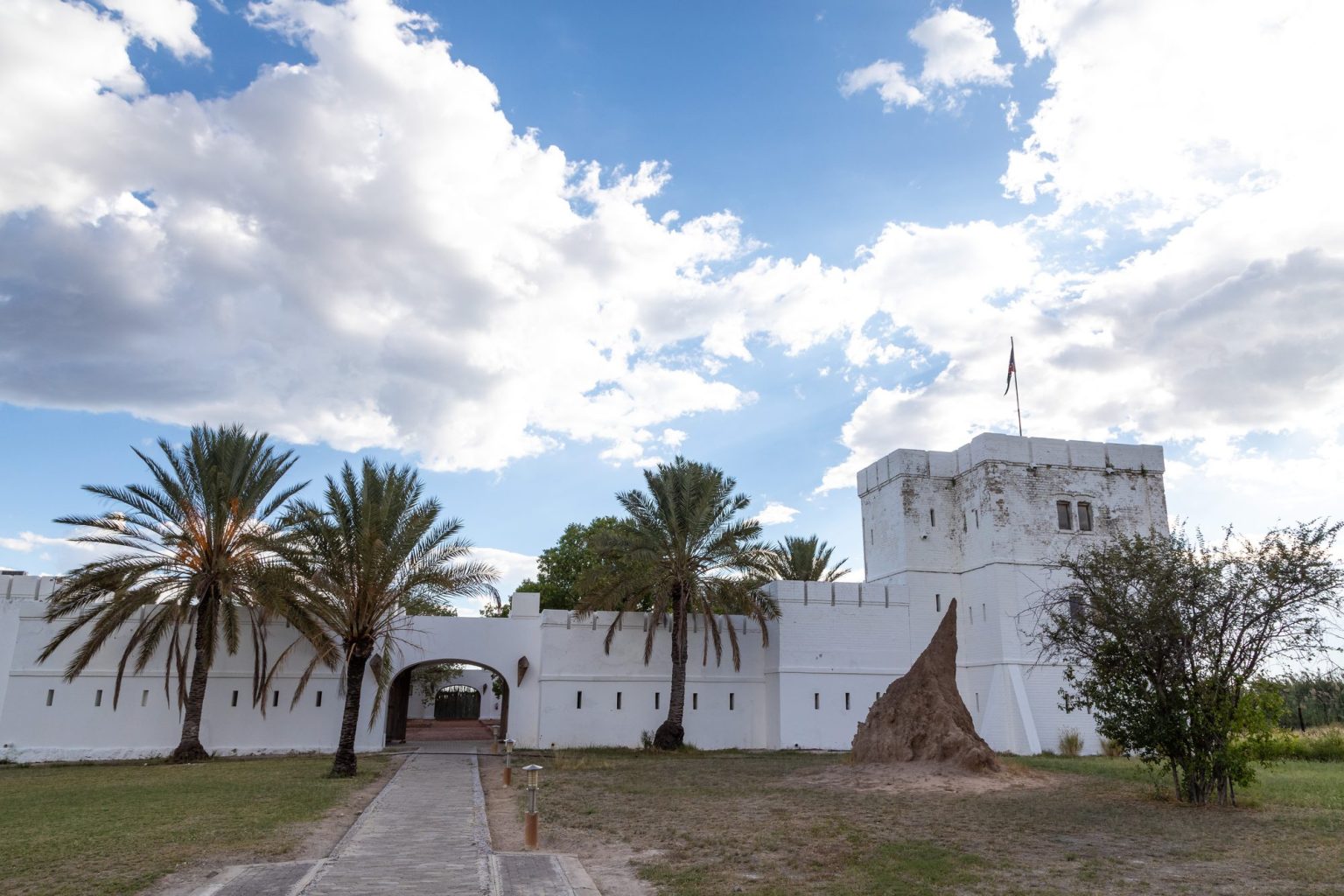 Fort Namutoni and the palm avenue
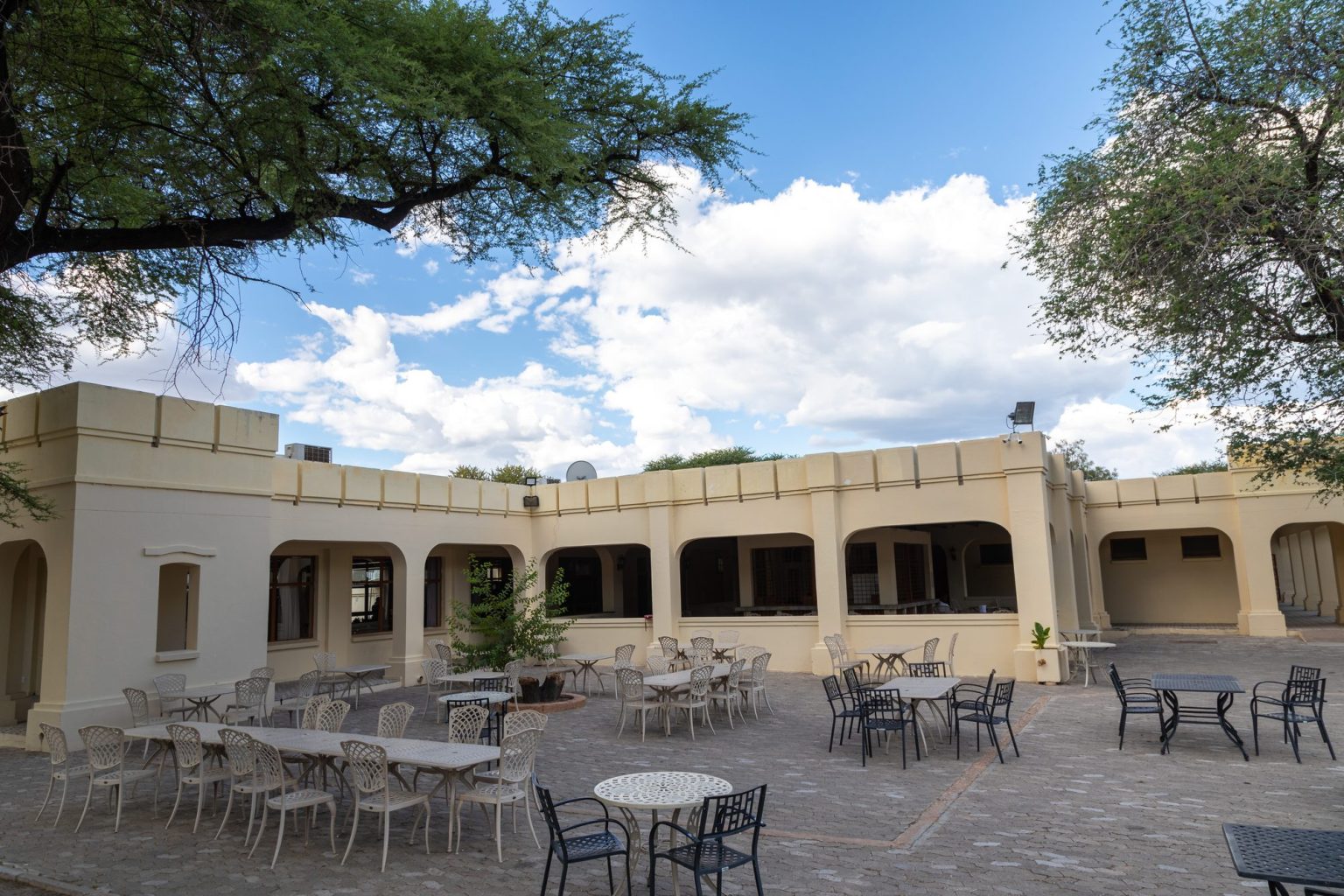 The fort terrace
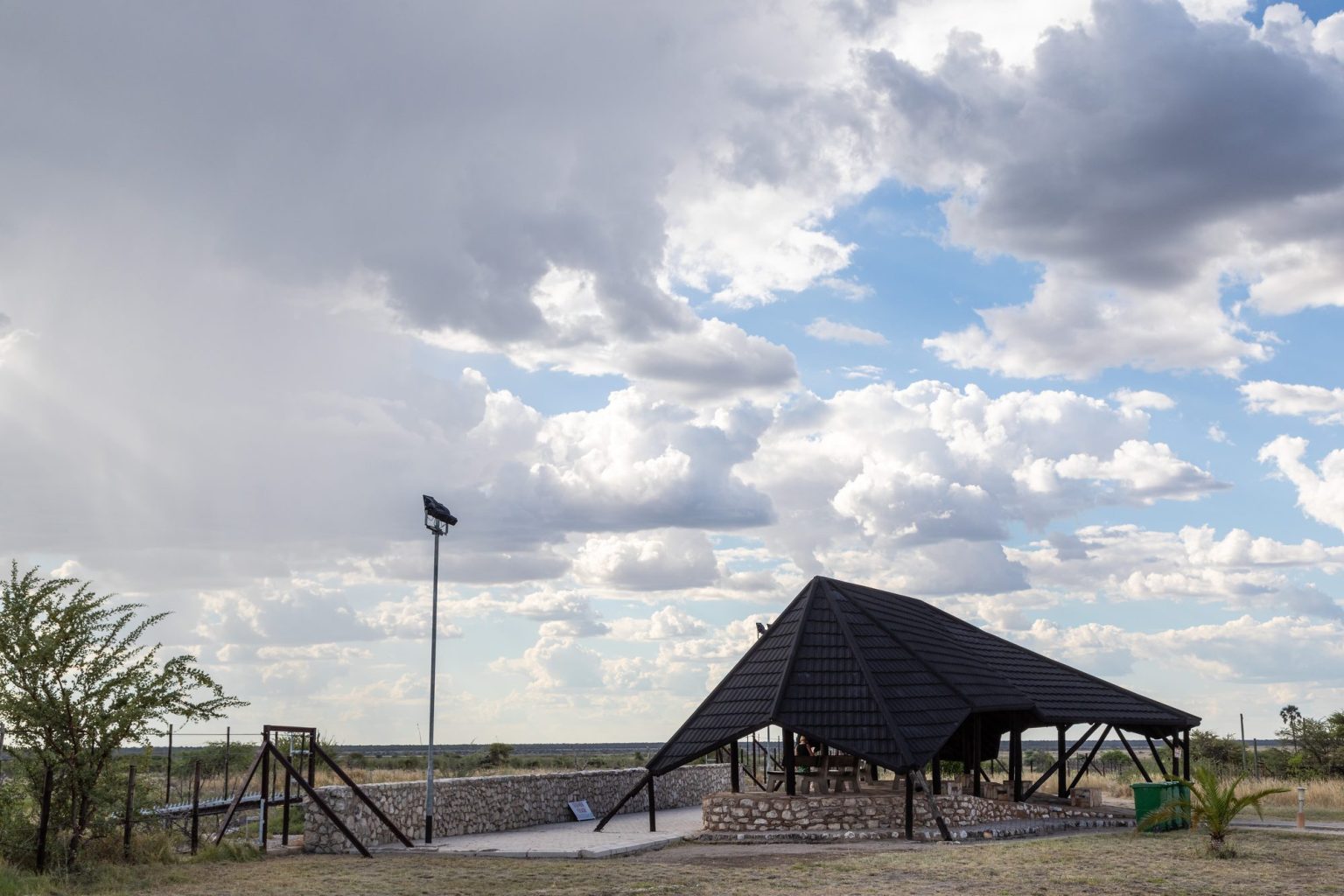 The waterhole viewing deck
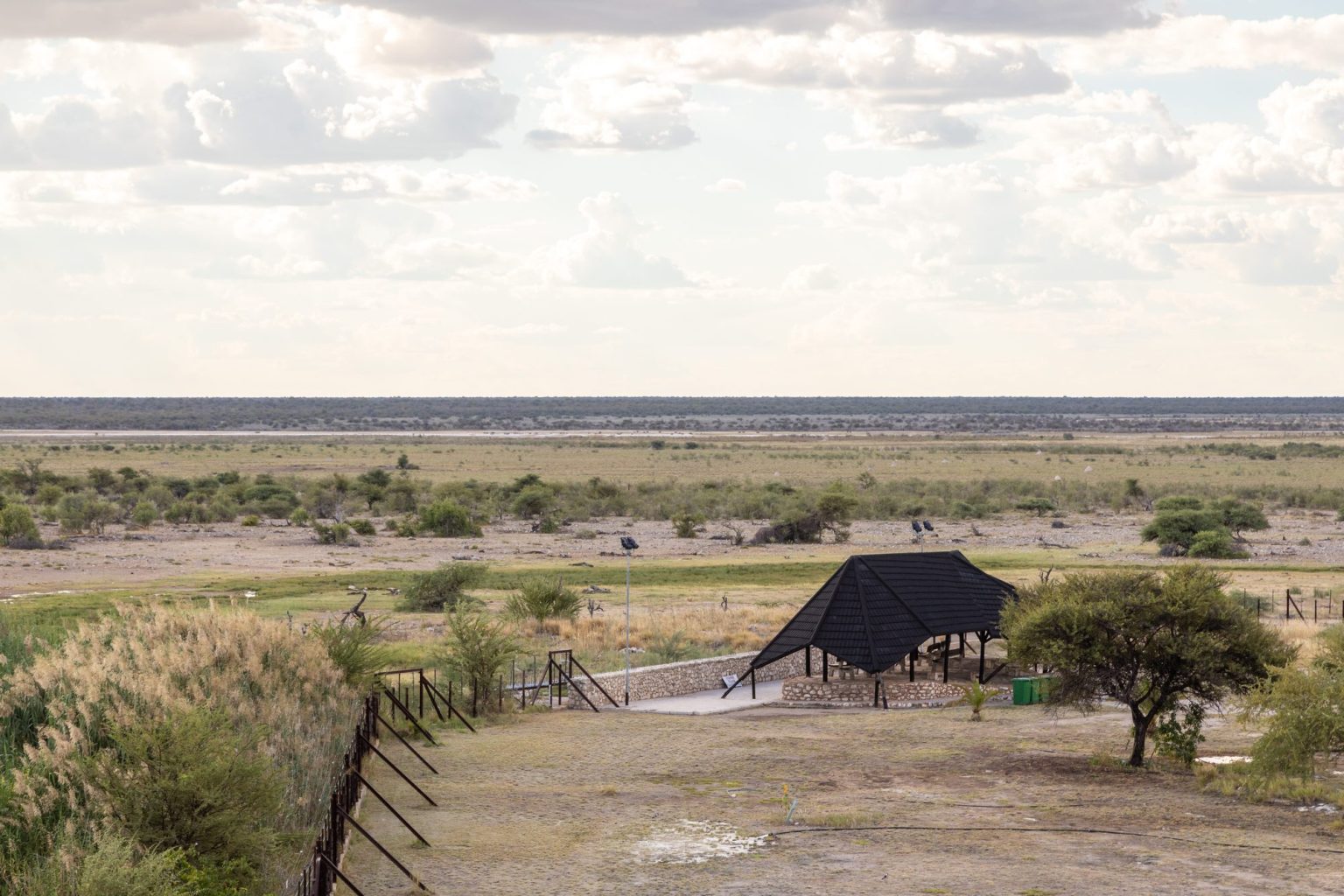 Fischer's Pan from the deck
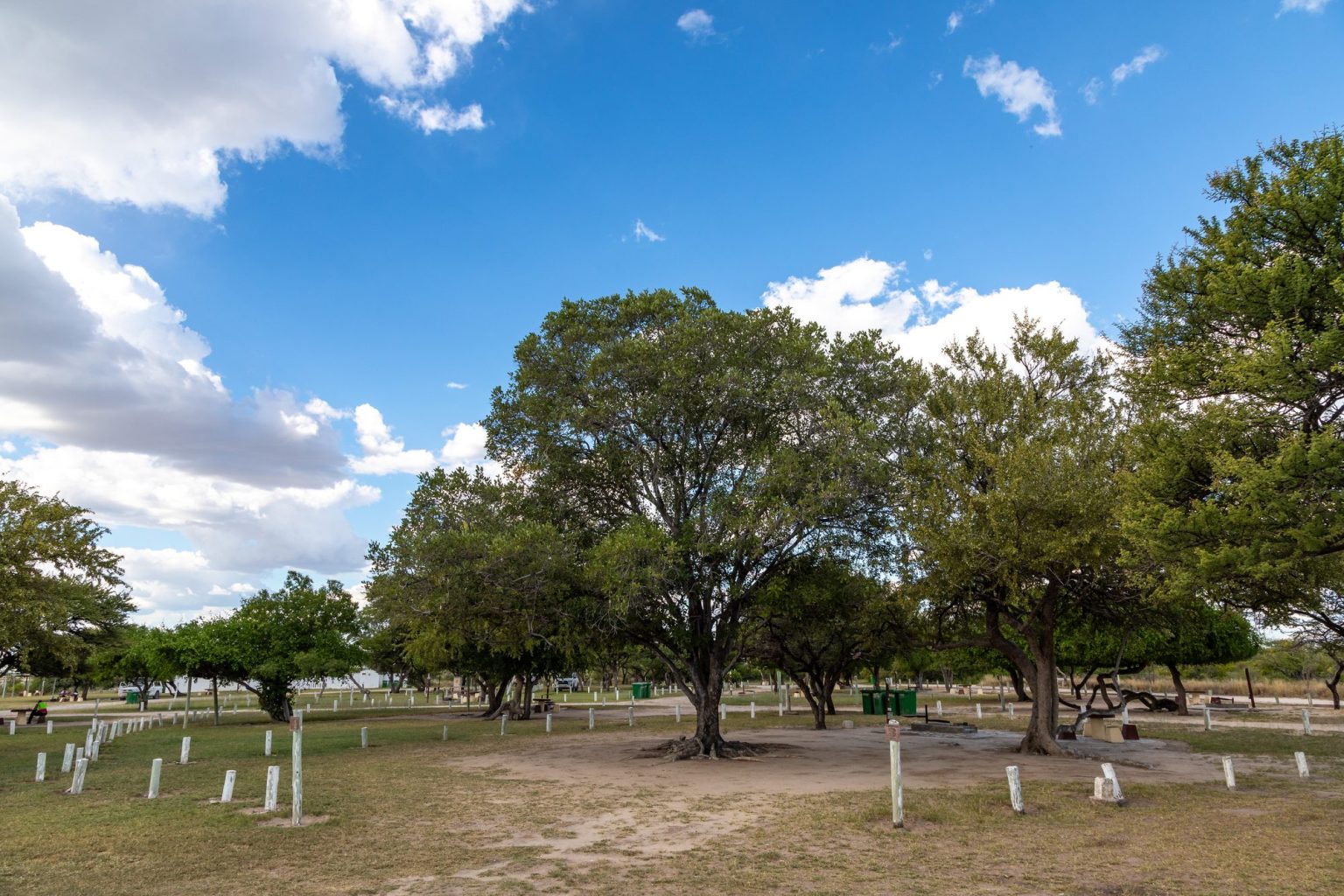 The campsite
Why stay at Namutoni Camp
Namutoni Camp is built inside and around Fort Namutoni — a German colonial fortification dating to 1906 — making it the only camp in Etosha National Park with significant built heritage. Set in the lush bushveld of Eastern Etosha just 8 km from Von Lindequist Gate, the camp anchors the park’s eastern zone and provides the closest access to Fischer’s Pan, Namibia’s most important inland birding wetland during the November–April green season. Namutoni’s bushveld setting attracts the highest density of leopard and cheetah sightings of any in-park base, and the perimeter waterhole — King Nehale — hosts elephant and rhino through the dry season. Accommodation is more limited than the western camps: three room types serve travellers prioritising birding, history, and predator viewing.
Accommodation at Namutoni Camp
- Camp Site (max 8 people)
- Double Room (2 beds)
- Bush Chalet (2 beds)
Namutoni Camp rates (2026–2027)
| Accommodation | Nov 2026 - Jun 2027 | Jul 2027 - Oct 2027 | |||
|---|---|---|---|---|---|
| Per Person Sharing | Single Rate | Per Person Sharing | Single Rate | ||
| Double Room (2 Beds) | Incl. Breakfast | NAD 1840 | NAD 1840 | NAD 2310 | NAD 2540 |
| Bush Chalet (2 Beds) | Incl. Breakfast | NAD 2160 | NAD 2160 | NAD 2680 | NAD 2915 |
| Camp Site (Max 8 People) | NAD 460 | NAD 550 |
Fort Namutoni and the King Nehale waterhole
Fort Namutoni was built in 1906 as a German Schutztruppe outpost on a Hai//om water source. Restored as a national monument, the whitewashed fort houses some camp rooms, the restaurant, and a small museum. Just outside the fort wall, the floodlit King Nehale waterhole draws nightly elephant, kudu, and — from June onward — black rhino. The waterhole is best viewed from the elevated fort tower at sunset and at 19:00–21:00. The camp also has a separate viewing terrace at the swimming pool.
Wildlife and waterholes near Namutoni Camp
From Namutoni, the most productive day-drive locations are:
- Klein Namutoni — 12 km; lion and leopard at dawn
- Chudop — 18 km; elephant herds and giraffe
- Fischer’s Pan — 7 km; flamingos and waterbirds in green season; dry pan in winter
- Kalkheuwel — 23 km; black rhino sightings reported regularly
- Twee Palms — 35 km; iconic pan-edge palms with classic Etosha photography backdrop
See the Etosha Waterholes Guide for the full inventory.
Activities at Namutoni Camp
- Self-drive game drives — Eastern Etosha bushveld routes
- Guided morning game drive — 3 hours, 06:00 departure, NAD 650 per person
- Guided afternoon game drive — 3 hours, 14:30 departure, NAD 650 per person
- Guided night drive — 2 hours, post-sunset, NAD 750 per person
- King Nehale waterhole viewing — 24/7 from fort tower and ground-level deck
- Fort museum — small heritage exhibition inside the 1906 walls
- Restaurant, swimming pool, fuel station, shop
What’s included with your stay
- ✓Accommodation in the room or chalet type booked
- ✓Breakfast (chalets and rooms, not camping)
- ✓Use of the swimming pool, waterhole viewing area, and fort museum
- ✓Linen and electricity in serviced units
Payable separately
- ✗Park entry fees: NAD 280 per foreign (non-SADC) adult per day (NAD 140 entrance + NAD 140 conservation, effective 1 April 2026 per MEFT); SADC adults NAD 180; Namibian adults NAD 60; vehicle ≤10 seats NAD 60 per day — payable at the gate
- ✗Lunch and dinner
- ✗Guided game-drive activities
- ✗Any conservancy or community levies
Compare Namutoni with the other Etosha National Park camps
| Camp | Setting | Signature feature | Best for |
|---|---|---|---|
| Okaukuejo Camp | Western Etosha, southern access | Floodlit waterhole — nightly rhino sightings | First-timers; book waterhole-view chalets 9–12 months ahead |
| Halali Camp | Central, mopane woodland | Moringa floodlit waterhole; smaller, quieter | Mid-park base splitting east/west itineraries |
| Namutoni Camp | Eastern Etosha, historic fort | 1906 German fort; adjacent to Fischer’s Pan wetland | Birding, leopard & cheetah viewing |
| Onkoshi Camp | North-eastern pan edge, eastern Etosha | 15 elevated chalets on the Etosha Pan rim; no through traffic | Couples and honeymooners; the most exclusive in-park camp |
| Dolomite Camp | Western concession | Elevated dolomite-outcrop chalets | Premium experience; exclusive western-zone access |
| Olifantsrus Camp | Western Etosha, 5 km from Galton Gate | Two-storey waterhole hide; camping only | Self-sufficient campers; dawn-to-dusk hide viewing |
Plan your Etosha visit
Namutoni Camp is the natural eastern base for an Etosha itinerary. Pair it with Halali Camp (central) for a 5-night east-west traverse, or with Onkoshi Camp for a premium pan-edge experience. Read the complete Etosha National Park guide or browse other Etosha National Park camps.
Enquire about Namutoni Camp
Send your dates and party size and we respond within one business day (Mon–Fri, 8:00–17:00 CAT) with availability and one clear recommendation.
Frequently asked questions about Namutoni Camp
How far is Namutoni from Von Lindequist Gate? +
Can I stay inside the historic fort? +
When is Fischer’s Pan worth visiting? +
Is Namutoni a good base for birding? +
Is Namutoni suitable for predator viewing? +
Ready to book this camp?
Send us your dates and we will confirm live availability with the park, usually within one business day.
Staying at more than one camp? Plan a multi-camp itinerary and we will check every leg in one reply.
Prefer to talk? Call +264 81 277 6560 · we respond within one business day (Mon–Fri, 8:00–17:00 CAT).
Still deciding?
Inside vs outside the park, by traveller typeSelf-drive or guided?
Which suits your trip, and what changesPackages and prices
Indicative costs for planned itinerariesPlan my Etosha safari
Tell us your dates and we build the route
Before you book
- Gate times, entry fees and permits
- Gate distances and real drive times
- How many days you need in Etosha
- How far ahead to book, by season
- Best wildlife viewing times by season
- Self-drive route guide
Compare your options
- Okaukuejo Camp – floodlit waterhole, best for first-timers
- Halali Camp – central base, Moringa waterhole
- Onkoshi Camp – pan-edge setting, most exclusive
- Dolomite Camp – western concession, elevated chalets
- Olifantsrus Camp – camping only, waterhole hide
- Lodges just outside the park
- Best time to visit Etosha
- Etosha map – camps, gates and waterholes
Not ready yet? Ask us a question and we will point you to the right camp.